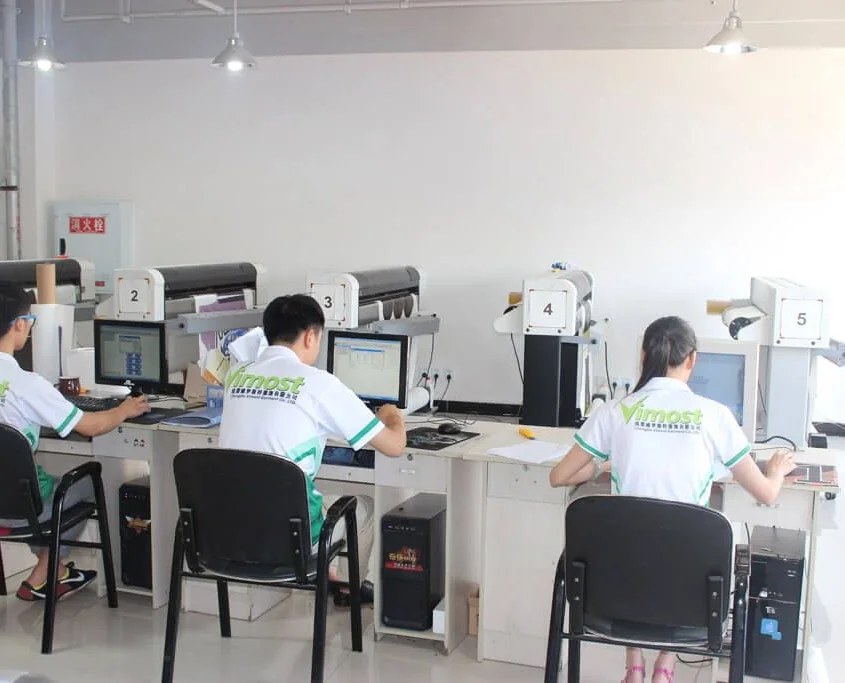
Every custom kit starts with one decision that shapes everything else: how the design gets onto the fabric. Get it right and your jerseys look sharp for years. Get it wrong and you are re-printing after a season — or paying for a premium transfer on a design that did not need one.
This guide compares the four printing methods used in team sportswear — sublimation, stitching/embroidery, screen printing and heat transfer — with real cost and durability considerations for each, plus the combination strategy that most professional teams actually use.
How Sublimation Printing Works
Sublimation starts with a printed transfer paper, which is heat-pressed onto the fabric at high temperature. The ink converts from solid to gas and bonds with the polyester fibers themselves. The design literally becomes part of the cloth.
Advantages of sublimation
- Never peels, cracks or fades — there is no surface layer to wear off.
- Unlimited colors and gradients — photos, shadows and full-bleed artwork print at the same cost as a two-color logo.
- Breathable — ink does not block the fabric's pores, so performance mesh keeps working.
- Same price for complex designs — a detailed full-back design costs no more than a plain chest logo.
Limitations of sublimation
- Works best on white or light polyester fabric — dark or low-polyester garments need a different approach or a white base layer.
- Not suitable for 100% cotton shirts (no polyester to bond with).
- High setup value in design: the artwork must be high resolution from day one.
For full-color club jerseys, sublimation is the industry standard. You can see finished examples across our range, such as our custom sublimation soccer uniforms and volleyball uniform sets.
How Stitching and Embroidery Works
Embroidery sews the design onto the fabric with thread — usually a crest, monogram or small logo, either directly or on a woven patch that is then attached.
Advantages of embroidery
- Premium, raised look — the texture reads as quality, which is why sponsors often request stitched crests.
- Extremely durable — a well-stitched crest outlasts the garment.
- Works on any fabric, including cotton polos, jackets and caps.
Limitations of embroidery
- Each color means an additional thread pass, so multi-color logos cost noticeably more.
- Large, detailed patterns are impractical — needle density limits how small details can be.
- A full-jersey design in embroidery would be slow and expensive; it is a finishing method, not a printing method.
Embroidery is the right choice for polos, jackets, caps and the crest on a match jersey — not for the jersey body itself.
Screen Printing
Screen printing pushes ink through a mesh stencil — one screen per color. It is the classic method for t-shirts and simple two- or three-color designs.
- Pros: very cost-effective at large quantities for simple designs; works on cotton.
- Cons: each color adds a screen and a pass; gradient-rich artwork becomes expensive; the ink sits on the surface and can crack over many washes.
For a single-color sponsor logo on 5,000 training shirts, screen printing wins on price. For a twelve-color sublimated jersey pattern, it does not make sense.
Heat Transfer and Vinyl
Heat transfer prints a design onto film or paper, then presses it onto the fabric with heat and pressure. It is the go-to method for player names and numbers, and for small on-demand batches.
- Pros: fast setup, no screen costs, ideal for individual names and numbers, wide choice of finishes (glitter, flock, metallic).
- Cons: the transfer is a surface layer — it can crack over time; large-area transfers reduce breathability; unit cost does not drop much with volume.
Heat transfer numbers are how almost every team kit gets its player names — including ours. Our factory-direct training jerseys typically ship with heat-transfer names and numbers as standard.
Testing and Quality Standards That Matter
Printing method claims are easy to write and hard to verify — which is why serious buyers ask for lab test reports. The three tests that matter most for team apparel:
Color fastness
Color fastness measures how much dye bleeds or fades through washing, light and sweat. Sublimated garments typically test at 4–5 on the gray scale (the top rating bands) because the dye is inside the fiber rather than on its surface. Screen-printed and vinyl garments rely on the surface layer, so their color fastness depends heavily on the ink quality used.
Shrinkage
Polyester shrinks very little when properly heat-set — expect under 3% on most performance fabrics. Cotton-rich blends shrink more, which is another reason sublimation favors full-polyester constructions. A good factory pre-shrinks or heat-sets fabric before cutting so the finished garment stays true to size.
Dimensional and seam strength
Seam pull tests and tensile strength checks catch weak stitching before it reaches your players. Our garments are tested by SGS for these parameters plus restricted substances compliance for the EU and US markets — ask any supplier for equivalent reports before you order.
Cost Structure at a Glance
Each method has a different cost anatomy. Understanding it prevents expensive surprises:
- Sublimation: design/file preparation is the main setup cost; per-piece cost is flat regardless of artwork complexity. Scales well from 100 pieces upward.
- Embroidery: relatively high per-piece labor, driven by stitch count and color changes — perfectly fine for a crest, expensive for large artwork.
- Screen printing: per-screen setup plus per-piece printing; minimal setup for one color, growing fast with each additional color. Cheapest only for simple designs.
- Heat transfer: zero screen costs and fast turnaround make it ideal for quantities under a few hundred; unit price stays high because each transfer is printed and pressed individually.
Translation: for a full-color club crest with gradients and a sponsor, sublimation will undercut screen printing at modest quantities; for a single-color design on 5,000 cotton shirts, screen printing wins. We quote both when there is a real choice, so you can decide with numbers in front of you.
Common Mistakes When Choosing a Printing Method
- Ordering a full-color sublimation design as embroidery — the artwork has to be reduced to a few thread colors, and the result rarely satisfies.
- Using heat transfer for the whole jersey body — large vinyl areas crack and hold sweat; the design should be sublimated and the transfer reserved for names and numbers.
- Printing a small crest with screen printing — you pay for screens and setup per color; for small areas, embroidery or a woven patch is usually cheaper and looks better.
- Forgetting fabric compatibility — screening or sublimation on cotton, or embroidery on ultra-light mesh, are all mismatch cases that end in a reprint.
Head-to-Head Comparison
Durability
Sublimation wins outright — the ink cannot peel because it is inside the fiber. Embroidery is close behind. Screen printing and vinyl both degrade over years of washing (screen ink cracks, vinyl edges lift).
Design freedom
Sublimation is unmatched: unlimited colors, gradients, full-bleed artwork at no extra cost. Screen printing is worst for complex designs.
Cost by quantity
Screen printing is cheapest for simple designs at high volume. Sublimation has modest setup (design work) and scale-friendly pricing. Embroidery is a premium line item per piece. Heat transfer is cheapest for tiny runs but does not scale as well.
Fabric compatibility
Embroidery and heat transfer work on everything. Sublimation and screen printing favor synthetic fabrics; sublimation specifically needs polyester.
What Professional Kits Use: The Combination Strategy
Look closely at a professional match jersey and you will see all three methods in one garment: a sublimated body carrying the full-color base pattern, an embroidered (or woven) crest on the chest, and heat-transfer names and numbers on the back. Each method is used where it wins:
- Sublimation for the body — color and design freedom
- Embroidery for the crest — premium, durable branding
- Heat transfer for names and numbers — fast, per-player flexibility
This combined approach is also what we recommend to teams ordering from us. It costs barely more than a single-method kit and delivers the look of a professional setup.
Sublimation vs Stitching: Which Should You Choose?
Ask yourself three questions:
- Where will the design go? Full-color jersey body → sublimation. Small crest or monogram → embroidery.
- What is the fabric? Polyester performance fabric → sublimation works. Cotton polo or jacket → embroidery or screen print.
- What is the quantity? Under 300 pieces with complex designs → sublimation keeps quality high and setup low. Simple design above 1,000 pieces → screen printing can be cheaper.
If your design uses more than three colors, or covers a large area, sublimation is almost certainly the right answer. If you are making one-off polos for staff, embroidery will look more premium per unit.
Making the Right Choice for Your Team
At our factory, we run sublimation lines, embroidery machines, screen printing and heat-transfer stations under one roof — 200+ machines in total — so we recommend the method with an honest cost-benefit view, not a bias toward one technology. If you are unsure, send us your design file and quantity and we will quote the two most sensible options side by side.
Ready to get your kit into production? Send us your design or quantity for a free mockup and firm quote within 24 hours — or browse our custom teamwear catalog for inspiration.